Some Candid Thoughts
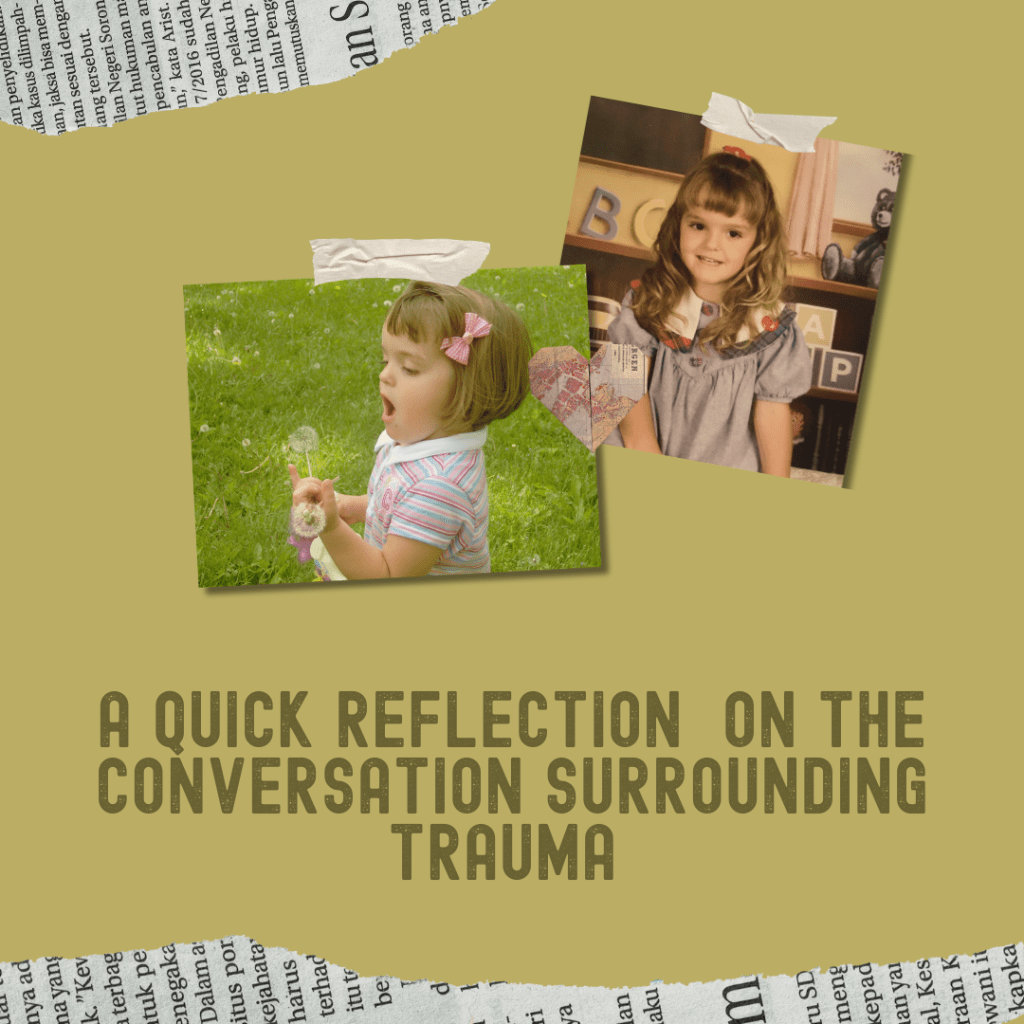
One concern I have when talking about trauma or anything related to it is giving the perception that I’ve had a hard life—I haven’t. Being open about this stuff is just something I’m passionate about! I’ve been through some really hard things, yes, but the two are not synonymous with one another. I grew up very privileged and, from all accounts, pretty happy! As I’ve said before, it’s hard for me to remember before age 12 anymore but much, in fact most, of my childhood was good: I played with the neighbors, we went on vacation, I had adults who loved me, etc. To not acknowledge that would, for one, be blatantly harmful but also two, be a disservice to all the people in my life who made that happen. However, it’s also important to acknowledge because—and I think this plays a big role in the stigma to begin with—as a whole, we tend to still possess simplified views of what trauma or abuse is, as well as the intent or character of the person who may have caused said trauma. We tend to think in extremes when it comes to things like these, probably in part due to the way they’ve been portrayed in media. In reality, it’s much more nuanced.
It’s a tricky subject to navigate for a myriad of reasons. To me, it feels like we may be lacking the vocab to validate perceived trauma while also acknowledging it’s subjectivity. The word trauma tends to get tossed around, and while it IS subjective, if we don’t have some kind of reins on the discussion, it’s not going to be productive. In fact, it can even be harmful (but that’s another post for another day).
Along with that, I heard someone say once, “There’s a difference between having a traumatic childhood and having childhood trauma.” That may feel a bit controversial, but as someone who lies in the latter category, I agree with that statement wholeheartedly; and I think it’s another distinction we need to talk about more often because trauma is an intersectional issue. We can educate and destigmatize all we want, but if we’re not getting to some of those core issues—poverty, racism, sexism, homophobia, etc.—we’re going to be treating the symptoms of an issue rather than the root.
 Project Paper Birds
Leave a comment